
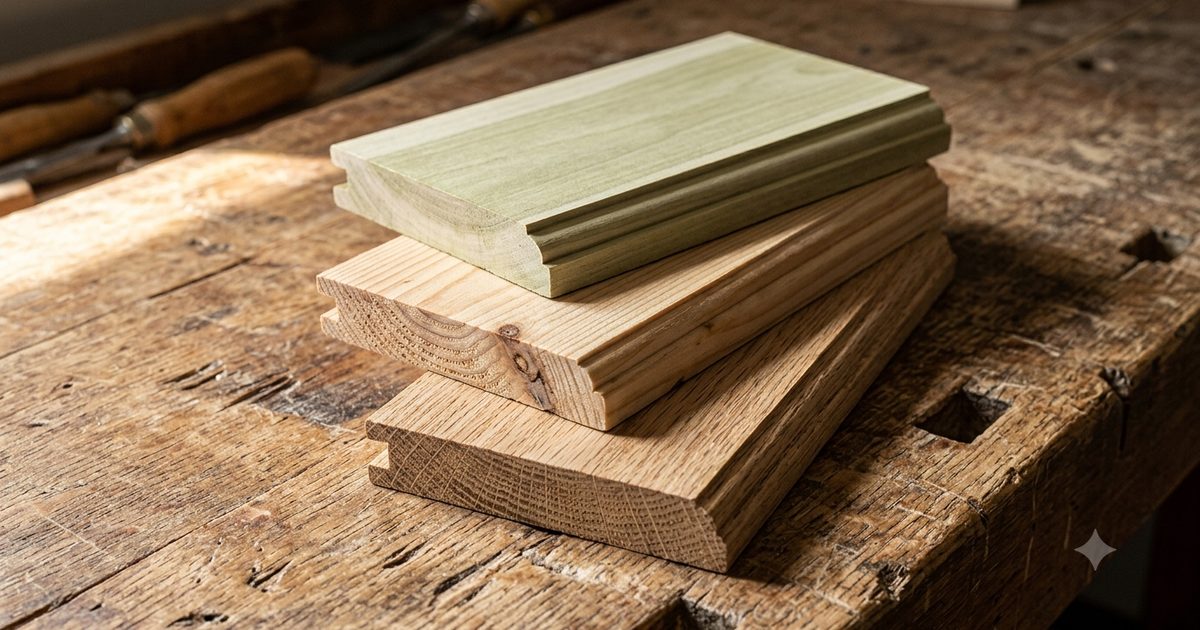
Poplar, Pine, or Oak? Choosing Wood for Painted vs. Stained Trim
The right wood depends entirely on one decision made before a single board gets cut: is this trim getting painted, or stained?
If it’s getting painted
Poplar is my default. It’s stable, machines clean, and its slight green-purple cast in the raw wood disappears completely under paint. Pine is a solid budget option, though its grain can “bleed” through paint over time if not primed properly — fine for base and casing, less ideal for anything getting a glass-smooth finish.
If it’s getting stained
Stain shows everything paint hides — so the wood itself becomes the design. Oak gives bold, open grain that reads as traditional and substantial. Maple stains more evenly with tighter grain for a cleaner, more contemporary look. Poplar can be stained too, but its color variation makes an even stain color harder to achieve without a toner coat.
Material choice is one of the cheapest decisions on a job to get right, and one of the most expensive to get wrong once it’s installed.
Planning a project?
Get a straight answer and an honest estimate — no surprise line items.
Request a Consultation